News

Daniel's Staff Pick: February 17, 2025

Morton Feldman: Rothko Chapel / For Frank O'Hara LP (Columbia Odyssey, 1976)

In his last few staff picks, Dominic has been telling you about the big collection we bought a few weeks ago. Last week, after we picked at it for several weeks, it was finally time to box up the less exciting stuff and move it to storage so it wouldn’t be in our way at the warehouse. As I was getting everything together and making a last sweep for good stuff for the store, I unboxed the 4 or 5 boxes of classical records that no one had really paid any attention to. While most of the collection was works by classical and early 20th century composers, I found a couple of minimalist bangers I couldn’t help bringing home. I’m always on the hunt for pleasant, relaxing music to play at home in the evening, so these records have gotten quite a lot of play.

Morton Feldman first came on my radar when I read an excellent book about John Cage a decade ago. Reading a book about John Cage is probably the best way for someone like me to appreciate him, as so many of his innovations were conceptual rather than strictly musical. Cage did for music what painters like Picasso did for visual art, questioning the medium’s fundamental assumptions in order to create something genuinely new. Cage’s contributions to music included his pieces for “prepared piano” (he would stick various items on and between the strings inside a piano to disrupt its normal ways of making sound, decades before Sonic Youth did similar things with their electric guitars) and his embrace of the idea of randomness in composition. Rather than viewing the composer’s intention as the soul of music, Cage relied on the I Ching to generate musical ideas, questioning the notion that the composer’s mind was the source of musical beauty. Morton Feldman was a frequently recurring character in the John Cage book, as the two were close friends who frequently bounced ideas off one another. I remember learning in the book that the two men initially bonded over their love for turn-of-the-20th-century French pianist and composer Erik Satie. Satie’s stark, slow-moving, and meditative compositions clearly pointed the way toward 20th-century minimalism. If you like slow, meditative music, do yourself a favor and pick up the next Satie record you see in a classical dollar bin. His “Gymnopédies” are particularly lovely.

“Rothko Chapel,” the piece that takes up the entire a-side of this LP, is a piece of music Feldman composed for the Rothko Chapel in Houston, Texas. I’ve never been to the Rothko Chapel (though I’d very much like to), but I’ve spent a good amount of time in a similar space, the Rothko room at the Tate Modern in London. You might be familiar with Rothko’s most famous paintings, which are large canvases featuring fuzzy-edged squares of color, sometimes contrasting, sometimes closely complementary. It’s the kind of thing someone allergic to modern art would look at and say, “I could have painted these sloppy-ass squares,” but I love his work, particularly the darker, earthier pieces he did later in his life (Rothko died by suicide in 1970). When I visited the Rothko room at the Tate, the experience was powerful partially because it was so different from the usual museum experience. Usually galleries are big, open spaces with white walls and crisp lighting meant to reveal the subtleties in the works on display. This can make being in a museum an anxious experience, because it can sometimes feel like you’re on display yourself, being silently judged by the other people in the space. In contrast, the Rothko room is so dim that it allows you to disappear into anonymity, to let go of that self-consciousness and lose yourself in the painting. The paintings themselves invite that with their saturated fields of violet, crimson, and black. You can hardly see them until your eyes adjust to the light; if you want to get the full experience, you need to put in the time to let your body physically acclimate to the space. When that finally happens, you notice your heart rate is slower, the world is quieter, and your experience of the paintings is more intense. From what I understand, the Rothko Chapel in Houston cultivates a similar experience. While it’s called a chapel, the space is non-denominational and not affiliated with any religion. The Chapel is a space meant to foster empathy and understanding, and is sometimes used for conferences devoted to weighty subjects like peace, justice, and human rights that can be highly charged.

Even without the accompaniment of Rothko’s paintings, Feldman’s piece evokes that same feeling. The slow-moving piano figures recall Satie’s work, but as the piece develops, a chorus joins in. While the choral melodies are as earthy as the colors in Rothko’s paintings, the human voices singing in close harmony get me in the feels, evoking the same choked-up feeling I get from a massive church choir, but it’s not ecstatic feeling… it’s deliberate, measured, even cerebral. It makes you feel like if we can just slow down and really listen, we can make the world a better place. Like many of you, lately I’ve been beset by the feeling that the world is crumbling around me, so brief moments of hope like this are even more valuable.
 

Record of the Week: Misanthropic Minds / Häpeä: Split 7"

Misanthropic Minds / Häpeä: Split 7” (Sewercide Records) The latest release on Canada’s Sewercide records is this international hardcore punk split EP matching one band each from the chilly northern latitudes of the North American and European continents. Misanthropic Minds is up first, and they’ve only grown more feral since 2021’s Welcome to the Homeland EP, delivering three more blasts of hardcore venom soaked in fuzz and static. The squealing guitar sound might make you think of Urban Waste (particularly on “Falling / Failing”), while the unhinged energy recalls the H100’s at their most primal. There’s literally no letup in tempo on MM’s side of this split… it’s just fast, fast, fast, with the only variation provided by the occasional rhythmic accent. This is hardcore for the hardcore, with no easy on-ramp and no concessions to the uninitiated. Oulu, Finland’s Häpeä is a perfect match for MM, with a similarly fried and aggressive sound. Thanks to the Finnish-language lyrics, occasional gang vocals, and strange intervals in the riffing, Häpeä’s sound is distinctively Finnish, with something about them that reminds me of Kaaos, but put through the ultra-hardcore meat grinder. As with Misanthropic Minds, there’s a minimalist streak in the composition (I love how the “chorus” part of the first song, “Myrkky,” doesn’t even have any lyrics) that puts the focus squarely on the wild energy of the performance. And unlike MM, Häpeä tosses a mid-paced bone to the moshers with “Kello Käy,” whose hooky riffing and gang vocals make the Kaaos comparison feel even more apt. If you like your hardcore punk wicked fast, ultra-primitive, and flying off the rails, both sides of this split are mandatory listening.

Usman's Staff Pick: February 10, 2025

Hello and thanks for reading. Today I will write about this fairly recent TST reissue we’ve had in stock for a little bit. I feel like TST is a band that is not well known outside of Sweden, unless you are one of those Swedish punk/hardcore fanatics. They were from a relatively small town named Västerås, which this EP Vås Punx is named after. There were not a lot of bands there, but the city is only 60 miles from Stockholm. When I compare them to bands like MOB 47, TST doesn’t really come off like a råpunk band, but they quickly developed much more hardcore tendencies after their first 7”. I would say their 1983 s/t LP was probably the prime of their hardcore shit. All that material was recorded in 1982, and it is furious. There are a few different recording sessions on the LP, and you still get a serious taste of the band’s ’77 sound. TST started all the way back in 1977, while Vås Punx didn’t come out until 1981. They recorded a demo and broke up for a while before releasing that 7”. I read that they used two songs from the demo, but I am not sure if it was literally the same tracks or just the same songs re-recorded. They only pressed 300 copies of this 7”, and oh baby, it’ll cost you a paycheck for an original!!

If you aren’t familiar with all this stuff, I’ll say my favorite TST material is easily No Teenage Future. This record was recorded in 1981 and released on a 12” between the 7” and the s/t LP. I wish I could find a full rip on YouTube cos it RULES. It’s the perfect blend of punk and hardcore with those anthemic choruses that get your blood boiling. Ah, here we go, I found something. If I pasted this right—it’s a playlist. The kinda silly video with the cool pics that starts the playlist was done by this Swedish label Birdnest Records, who released a TST compilation some years ago. That double disc reissue would be a discography, but it’s missing Sweden, a 12” they released in 1984. I haven’t listened to it in a long time, but I don’t remember liking it very much. Oh shit, they have a 1988 LP too, haha, I never knew that. Anyway, since I have that comp on Birdsnest, I was on the fence about scooping up this Vås Punx reissue. The comp has great sound, but man, nothing beats a repro-reissue. I’m a sucker, but I have other reasoning as well, haha. The comp does sandwich these tracks between others, which didn’t make a lot of sense to me. Besides that, this 7” reissue added some cool photos of the band I have never seen before. I wish either reissue added a bit of a band biography or interview or something, cos it would be super cool to read some more about them. The Vås Punx reissue has some brief liner notes, though. Ah yes, if you aren’t familiar with this EP you can jam it here. Alright, that’s all for this week. Cheers and thanks for reading everyone.


Dominic's Staff Pick: February 10, 2025

Greetings all in Sorry State Newsletter land. It’s Super Bowl Sunday as I write, not that I have much interest in that, other than perhaps the halftime show. Earlier today I was left feeling flat as the Reds got knocked out of the F.A. Cup by Plymouth Argyle. Good on them for having their day. The prospect of giant-killing has always made the F.A. Cup a compelling competition. There’s not much like it. So, for Liverpool another chance at the quadruple has ended for this season. LoL. Still three more trophies to play for, and even if you don’t win anything, surely it’s better to be in with a chance than none. Unless you revel in misery, of course, which some do, but most of us who support a team want them to win.

Anyway, back to the Superbowl halftime show, which will have featured Kendrick Lamar performing. We sold a few copies of his new one over the weekend and I took a listen. I like the Spanish/Latin influences on it. I had a chuckle with some customers in the store, talking about how this will hopefully drive the Maga crowd mad as now that they are fully out as racists and hate Spanish-speaking people, they won’t be able to like any of it. Hell, they can’t like anything now. No Taco Tuesday for Maga now. No anything that can’t be claimed to be completely “white.” That doesn’t leave an awful lot left, does it? Certainly, music wise, the Maga record shelves will have to be very bare going forward as 99.99% of all music we enjoy has roots or influences or is played on instruments that came from people of color. Enjoy your a cappella barber shop quartet music you fuckers, because there’s not much else left for you.

For the rest of us who aren’t asshats and can appreciate people of all colors, creeds, religions and nationalities and who find that diversity enriches rather than dilutes, let’s continue and talk about some music. I spent another week adding more records to our system that we scored from the collection I mentioned last week. There is still much more great stuff to add, but so far, we have been delighting our local shoppers with the quality and the array of titles hitting the bins. This past weekend, Jeff put together some of the Rock and Metal highlights and backed them up with tons of solid copies of so many classics. It was like a field day for our shoppers, and I was psyched to see people so excited about their pick-ups. Look out for more next Friday. I expect a lot of the Jazz, Blues, Reggae and Soundtracks will feature.

I’ve been enjoying checking out so many records from this collection that I was unfamiliar with and refreshing my memory on those I was aware of. For my pick this week, it’s a combination of the two: an artist that I have loved for many years and a couple of records by him I didn’t have. I’m referring to the jazz legend Cal Tjader. Master of the vibraphone and a decent drummer also, he is best known as being the most famous non-Latino Latin musician. Born to Swedish parents in St. Louis and raised in the Bay Area of California, he spent thirty-odd years as a successful musician before passing away suddenly in 1982 from a heart attack whilst touring the Philippines. He was only 56.

His resume is long and includes his beginnings with Dave Brubeck, being a part of George Shearing’s band and embracing the Latin Jazz sound that was exploding in the early 1950s. During his time in New York, he met up with the likes of Mongo Santamaria and Willie Bobo and soon after formed his own group, The Cal Tjader Modern Mambo Quintet and began a long run of releasing quality albums on the Fantasy label. These records all feature top notch Afro-Cuban musician talent and really cook in places. The 1960s saw Cal switch to Verve Records, where he enjoyed his most successful period. The album Soul Source from 1964 was huge and was probably my first exposure to his music years later. The title track was a cover of a Dizzy Gillespie tune and where the term “Salsa” was coined to describe the new Latin sound.

I can’t rave about how good Cal Tjader is enough and always pick up any record that has his name on it. For a while, you could pick these up cheaply and easily, but that’s getting a little tougher now for certain titles. These records are known for being cheap heat. Records that punch way above their weight. I would add the likes of Herbie Mann and Ramsey Lewis into this camp, too. Artists that were popular and sold loads of records, but always kept the quality high, especially when it came to picking the musicians who played on their albums.

After all the success of the Fantasy Records period, a time that also saw Cal help save the Monterey Music Festival, which obviously a few years later hosted Jimi Hendrix, The Who, Otis Redding and Janis Joplin for those famous shows, and then the Verve Records era where he really took off, Tjader joined fellow musicians Gary McFarland and Gabor Szabo to found Skye Records. That label only lasted a few years, but put out great records by all three of them and others, particularly the awesome soft-psych gem by Wendy & Bonnie. Come the mid-1970s and Tjader found himself back on Fantasy and there released some tasty Jazz-Funk albums. The two I picked were from that time. One called Amazonas from 1976 and the other titled At Grace Cathedral released the following year in 1977.

Amazonas features terrific playing from the Brazilian group assembled for the session by producer Airto Moreira and of course great work from Cal himself on vibes and marimba. George Duke is also on hand to help with arrangements and song writing duties. So, there is pedigree a plenty. The album was recorded in L.A., but has a strong Latin and South American feel, is funky in places and sounds great. I’m digging the cut Mindoro the most.

At Grace Cathedral is a live album recorded at the San Francisco church in May 1976 and was a benefit for the hungry. Cal was a replacement for the intended Vince Guaraldi who, like Tjader would later, had just recently passed away unexpectedly from a heart attack. Vince and Cal were close friends, and the recording is dedicated to Guaraldi, who played there himself years earlier. The album is a good one and starts strongly with I Showed Them, followed by a Milt Jackson tune called Bluesology and then on side two opens with a nice medley from Black Orpheus, a nod to Vince Guaraldi, who released Jazz Impressions Of Black Orpheus back in 1962, also on Fantasy Records. As with Amazonas, the musicians playing on this date are all outstanding. Long time Tjader associate Pancho Sanchez excels on the congas and Lonnie Hewitt adds some nice electric keyboards. Rob Fisher plays bass and Pete Riso is on drums.

Are either of these albums the essential Cal Tjader? Perhaps not. Those ones from the 1950s and 1960s are probably the place to start, but for lovers of good Latin inspired 70s fusion, these are highly enjoyable records to check out. Give ‘em a listen if that is your bag.

Okay, deadline approaching… I need to cut things off here. Thanks for reading and we’ll see you around these parts next time or even better in the store itself.

Cheers - Dom


Jeff's Staff Pick: February 10, 2025

What’s up Sorry Staters?

I’m feeling a little fried at the moment. Why? Shit, definitely has nothing to do with the Super Bowl. I honestly forgot that was even happening while I was at work on Sunday. I couldn’t even tell you which teams were playing. Seriously. Maybe I’m worn out because I overdid it on the beer and vegan cheese dip while at my friend’s birthday party the other night while homies were doing karaoke renditions of “Freak on a Leash” by Korn? Yeah, that’s gotta be it. I’ve also been working on getting details together for Public Acid’s European tour later this year. More to announce on that front in the weeks to come.

Also, attention NC locals reading this: There are a couple of cool punk gigs coming up in Raleigh, so mark your calendars! I’ll announce the full lineups and get Daniel to include the flyers for these in the next week or two. Here’s what I’ve got cookin’:

-April 2nd- PAPRIKA (NOLA) @ The Pour House
-April 24th- JAIL (DETROIT) @ Neptunes

My staff pick this week is kind of a funny one that caught me by surprise. This past weekend, I happened to quickly pop into a local shop just down the street from where I live called Nice Price Books. Nice Price is a long running store here in Raleigh that sells used books, records, VHS, and other knick knacks. Every now and then, I’ll wander in there and find some cool punk records. I always think to myself, “Huh, I wonder who sold these?” Because I imagine judging by the records, it must be someone I know personally unloading stuff from their personal collection. Who knows?

Anyway, I was lucky enough to grab the Official Bootleg double 7” by Poison Idea. You’re probably thinking, “Geez, Jeff talking about Poison Idea once again! Who woulda thought?” I know, I know. While I do have a sizable chunk of the Poison Idea discography crossed off already in my personal collection, I’ve never stumbled across this double single—or just never bothered to order a copy off of the internet. I always thought the packaging looked cool with what I always refer to as the “Kings of Punk skull” repurposed on a red background. The records also come housed in a cool gatefold 7” sleeve. This super nice copy was mad cheap at Nice Price, so I was stoked to find it. For those unfamiliar, this release came out in 1991 around the Feel The Darkness era. It’s a funny collection, with PI’s take on cover tunes like “We Got The Beat” by The Go-Go’s and “Harder They Come” by Jimmy Cliff. Now, how often will I revisit the saloon blues rendition of “Lawdy Miss Clawdy” on a regular basis? Shit, I dunno, probably never! Kinda funny, but at least these cover tunes are an entertaining listen, if nothing else.

“Plastic Bomb” is also on one of the 4 sides, the only original tune by Poison Idea. To which I was like, yeah cool whatever, I’ve heard this song a million times. I threw the 7” on the turntable, and that all-too familiar piano intro kicks in—but within a few moments, I was like wait a minute… this is different. In all my years loving Poison Idea, I had no idea that this version of “Plastic Bomb” is basically like an alternate mix version. In the intro, the guitar is way more up front and playing a different melody. Even in between the verses, the little lead sections are totally different. Most importantly, the melodic solo that happens after the 2nd “whoa-oh” chorus has this guitar harmony that I’ve NEVER heard before. My mind was blown. I posted a clip of this on my Instagram story, and one of my buddies was like, “Yeah dude, you’ve ain’t never heard Poison Lizzy before?” Haha. Then on the other hand, I had several other people that reacted just like me, like “Wow, I gotta go back and check this out!” It’s funny when you’re so familiar with how a song sounds on a particular recording that when any type of alteration from your expectations makes you do a neck-breaking double take. Now hearing this badass Iron Maiden-esque guitar shred version of “Plastic Bomb”… dare I say, better than the album version?

If you’re interested, I imagine this version of “Plastic Bomb” is available to listen to on the internet. Or perhaps it’s also been included as a bonus track on one of the many Feel The Darkness reissues in recent years? I definitely recommend experiencing this version of the song, especially if you’ve become all too comfortable with the proper album version over the last 30+ years. Anyway, that’s all I have to discuss this week. As always, thanks for reading.

‘Til next week,

-Jeff


Daniel's Staff Pick: February 10, 2025

Clinton Heylin: Bootleg: The Secret History of the Other Recording Industry (1996, St. Martin's Griffin)

It’s been a while since I’ve updated you on what I’ve been reading, but the winter lull in punk gigs has me tearing through books. Right now I’m reading one about John Peel that has me listening to recordings of his old radio programs (this book also introduced me to the John Peel wiki, an amazing resource), and perhaps I’ll have more to say about that in a future installment. For now, though, I wanted to share some thoughts on this book about the bootleg record industry I read a few weeks ago.

As someone who was a teenage music fanatic when Napster et al. completely upended the record industry in the late 90s, I’ve long been interested in intellectual property and copyright. I learned more about the topic during my years in academia, where I studied the 18th century Anglophone world. The rapid expansion of printing technology during this period prompted some of the first attempts to articulate and codify intellectual property law. Also, part of my duties as a first-year English teacher included giving students lessons on the basic principles of copyright. Of course, running Sorry State I also bump against this topic with some frequency, and it continues to interest me. I wasn’t sure what to expect from this book, but I dove in with some eagerness.

Right off the bat, Heylin’s book brought several aspects of the bootleg world into clearer focus for me. He distinguishes between three different manifestations of the bootleg trade: counterfeit releases (unauthorized reproductions meant to pass for, or at least closely mimic, the original item), proper bootlegs (collections of live material and/or unreleased studio sessions, compiled and sold by independent manufacturers), and “protection gap” releases (which I’ll get into below). Heylin spends relatively little time on the counterfeit release trade, for a couple of reasons. First, he’s very interested in the quasi-artistic choices bootleggers make as part of their process (sourcing and compiling material, creating artwork and packaging, etc.), while counterfeiters merely seek to mirror another release as closely as possible. Second, from what Heylin says, the counterfeit record industry in the United States was (is?) controlled almost entirely by the mafia, which limits his access to the key players. Certainly no mobster worth their salt is going to squeal to some nobody music writer.

Heylin does, however, gain access to many of the 70s’ and 80s’ most prolific and notorious bootlegers, most of whom agree to go on the record (albeit under pseudonyms). As one might expect, many folks involved in this illicit trade are real characters, and their shenanigans make for great stories. There are plenty of entertaining anecdotes about sourcing studio outtakes from on-the-take record company and recording studio execs, getting corrupt sound guys to wire recording devices straight into the soundboard, and how the bootleggers got their wares manufactured without ringing any alarm bells. Speaking of the latter, there’s a great story about one enterprising bootlegger who, during a crackdown at the LA pressing plants, repurposed a bunch of old farm equipment into a DIY record pressing machine. The jockeying for position among the bootleggers is an interesting tale, mostly because it was a free-for-all with no rules. If someone came out with a successful title, others would rip it off within a matter of weeks, if not days. Often they’d mix and match previously released material from older bootlegs with things they’d source themselves, creating a dense knot of provenance that no fan hoping to find the best version of their favorite artist’s studio outtakes or live set could hope to unwind. When one bootlegger came up with an interesting marketing idea like distinctive artwork or a label name and logo, their competition made sure it didn’t remain an advantage for long. One of the most visible and notorious bootleg labels was called “Trade Mark of Quality,” but so many people used the name and logo that it was anything but.

One thing that surprised me about Heylin’s book is that most of the bootleggers insist what they were doing was perfectly legal. Certainly there’s an element of feigned innocence here, but on many occasions these issues were litigated in the courts, and sometimes the bootleggers came out on top. Part of this is because of the intricacies of copyright law. Even in the United States, which has the most stringent intellectual property laws in the world, the ability to copyright an audio recording was not definitively established until very late in the 1970s. Before that, U.S. copyright law recognized the copyright on a musical composition (lyrics and music / melody), but not an individual recording of that music. (A couple of months ago I was reading Joey Ramone’s brother Mickey Leigh’s book, and there’s a story about the band hiring him to transcribe the music on the first Ramones album for the copyright office… of course none of the actual Ramones could read and write music.) I found the US’s late adoption of recording copyrights shocking, but other countries lagged much further behind, making way for the protection gap releases I referred to above.

Before a few different international conventions solidified international copyright law in the 60s and 70s, each country had its own unique approach to copyright law. Even when countries signed on to these international copyright treaties (which most European nations did), works that predated the treaty weren’t automatically grandfathered in, meaning they were still subjected to the older laws. For instance, in Germany a recording was only eligible for copyright protection if the performer was German or the performance took place in Germany, so a recording of a Pink Floyd show in the US or the UK fair game for German bootleggers. Each country implemented their laws in different ways, so you had a situation where it might be perfectly legal to commercially release a live concert recording in one country, but not in another. Bootleggers were quick to exploit this loophole (the “protection gap”), manufacturing their releases in countries like Germany and Italy that had looser copyright restrictions and (legally) importing the finished product to markets like the UK and the US. Of course, the recording industry worked tirelessly to close these loopholes, but as the iron curtain became more permeable through the 80s, plants in countries like Yugoslavia and Hungary operated completely outside the umbrella of western copyright law. When that line dried up, the bootleggers found manufacturers in Asia. It’s been a decades-long game of cat and mouse.

Heylin, like the bootleggers themselves, is skeptical the law affords record companies the level of control they seek over products relating to their artists, and reading this book made me realize that many of what I took as basic assumptions of music copyright are not as intuitive as I thought. Why should a record company own the copyright on a live concert recording that I made using my equipment at an event that I paid to attend? As Heylin explains, the record companies would have us believe they own that recording and the rights to reproduce it, but the legal reasoning they rely on is shaky, and there are many examples of it not holding up in court.

By the way, I should note this book came out in 1996, so it’s quite out of date in some respects. Heylin does a lot of hand-wringing about how the CD changed the bootleg industry, but the file-sharing revolution that happened just a year or two later totally changed the terms of that debate. Still, Heylin’s examination of the history of copyright law and the bootleg trade is well-researched and authoritative.

If you’re interested in bootlegs and/or copyright, this is a great read. Heylin’s book is dense but lively, and I’ve hardly scratched the surface of all it offers here. It also got me spinning punk’s most infamous and notorious bootleg, the Sex Pistols’ Spunk. Sadly, I don’t have Spunk on vinyl (shame!), but you shouldn’t be surprised to see me do a thorough analysis of it in a future installment.


Featured Releases: February 10, 2025

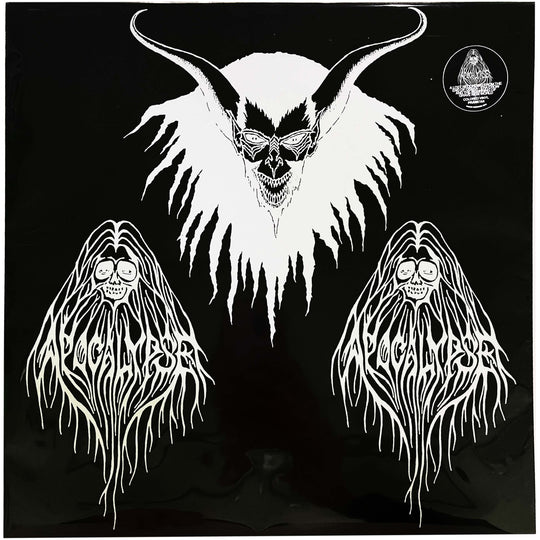
Apocalypse: S/T 12” (Prank Records) Prank Records gives us a meticulously crafted US pressing of this enigmatic record that first surfaced in a tiny edition in 2021 on the Japanese label Mangrove. The record documents two different bands, both fronted by Crow (vocalist for the legendary Japanese hardcore band Crow), and at least one of which was called Apocalypse. Confused yet? The recording is dated 1987-1989 and “all lyrics and music” are credited to Crow, but beyond that, concrete details are scarce. I am a huge fan of Mr. Crow’s music. I love Crow’s early, heavily Discharge-inspired records, I love their later, Sabbath-infused records (perhaps even more), and I ride for Crow’s other projects like Grave New World, Death Comes Along, and Kaiboushitsu. Crow, as a musician, is artistically restless and always pushing limits, and this Apocalypse record contains some of his most challenging work. Indeed, the first track, “Apocalypse I,” may be the most challenging piece of music Crow has ever released. It’s a ten-minute long deconstruction of the Discharge style, and its first eighty seconds seem to ask, “what if you took the Discharge template and stripped away the riffs, the drums, the guitars, bass, and even the lyrics… what would you be left with?” The minute and twenty seconds of multi-tracked, abstract vocalizations that answer the question are not an easy listen, but perhaps “Why (Reprise)” is too easy a listen given what that music aims to express. (For a different frame of reference, imagine an a cappella rendition of Integrity’s “Vocal Test.”) Once the music kicks in, “Apocalypse I” sounds a lot more like Discharge, but instead of extracting almost all the elements, it removes just one—any sense of musical development or resolution—subjecting Discharge’s style to Krautrock’s hypnotic repetition. But rather than Can’s meditative quality, “Apocalypse I” sounds agitated, enticing you toward insanity with the riff’s relentless, uncompromising repetition. If you’re able to make it past that first track, the rest of the record is less difficult, but still soaked in Crow’s instantly identifiable aesthetic. “Apocalypse II” and “Inferno” lean toward the spooky, mid-paced 80s Japanese style of Crow’s Kaiboushitsu project, while “Dream” fiddles with the template of later Discharge songs like “The Price of Silence.” “Apocalypse III” is closer to free jazz than hardcore punk, while the album-closing “The End” (reprised on Crow’s 1995 The Crow EP) is more conventional musically, but lets Crow run wild with his talent for making strange sounds with his voice and finding uniquely eerie melodies. While there are probably only a handful of people on earth who are steeped enough in both Discharge-derived hardcore and avant-garde music to truly appreciate this record, those who do will be happy to make some shelf space for a record that is peerless in the singularity of its vision.

No streaming link, sorry!

Zyklome A: Uitgesproken (1980–1985) 2x12” (Ultra Eczema) Lately there has been some conversation in the hardcore underground about reissue culture, specifically the tendency for labels to pad out reissues of classic records with (what many see as) unnecessary extra tracks and packaging bells and whistles like posters, booklets, box sets, etc. I’m all for getting the music out there as cheap as possible for the punx, and I also agree that, more often than not, this bonus content only dilutes a record’s original impact while making it needlessly more expensive. But, on the other hand, a well-done reissue can also deepen one’s enjoyment of an original punk artifact. Case in point, this reissue from the 80s Belgian band Zyklome A. I think even the most committed hardcore maniac would concede that Zyklome A’s 1984 LP, Made in Beglium is a good-but-not-great album. Zyklome A can play fast and hard, the production is strong, and the packaging is cool and punk, but the record is kind of samey-sounding, growing repetitive by the end of its 16 tracks. Just a couple of months ago, we had an original copy in the shop and I listened to it several times, trying to figure out if I liked it enough and would listen to it often enough to justify the expense of an original pressing. Ultimately, I let the record go (Usman bought it, LOL), and now we have this double-LP reissue in stock. I’ve been loving this reissue, but I don’t regret my decision to pass on the original because I think this collection does a better job of representing Zyklome A than Made in Belgium did. The first disc of Uitgesproken is a straight reissue of Made in Belgium, and while I don’t have an original copy to compare, I swear this reissue sounds better than the original. The mastering on Uitgesproken is clear, loud, and bright, and when I played disc 1, it hit me in a way Made in Belgium never has. Maybe I was just in the right mood or in the right environment, but without a doubt this collection (both discs) sounds great. Then you get to the second disc, which collects all the split EP and compilation tracks Zyklome A recorded along with a live set. Despite the disparate source material, disc 2 sounds just as good as disc 1 (even the live stuff, which must be straight from the soundboard as there’s no audience noise whatsoever). Maybe it’s because these songs are from different sessions, but disc 2 avoids the samey quality that plagued Made in Belgium, with the band shaking up the tempos and grooves just a hair while remaining very, very punk. And then there’s the booklet, a super thick, full-color tome that tells you everything you could ever possibly want to know about Zyklome A. It’s bursting with pictures, flyers, and ephemera, all of it beautifully photographed and reproduced. Flipping through this booklet while listening to the music, I’m transported to mid-80s Belgium, immersed in Zyklome A’s world. Of course some bands like the Misfits or the Stooges can build a world and invite you in like this on a studio LP… Zyklome A need a little more than that, but visiting that world is just as exciting, and Uitgesproken takes me there more effectively than Made in Belgium ever did. Certainly Uitgesproken is a treat for any 80s international hardcore fanatic (especially at the attractive price we’re selling it at), and while I don’t think we should suspend our skepticism of reissue culture, for me this is proof that a deluxe reissue can be done right.


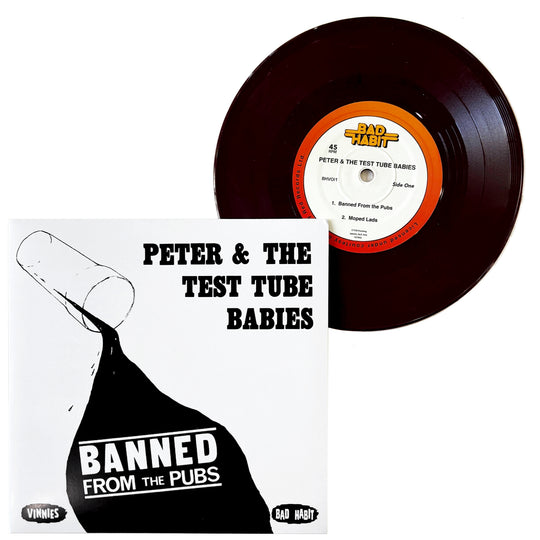
Peter And The Test Tube Babies: Banned From The Pubs 7" (Bad Habit Records) Australia’s Bad Habit Records gives us a no-frills reissue of Peter & the Test Tube Babies’ first single. Originally released on No Future Records in 1982, “Banned from the Pubs” stands out as one of the strongest releases in a label catalog packed with all-time classics. This single flips the typical UK82 single script, putting the two rippers on the a-side and relegating the mid-paced, more tuneful “Peacehaven Wild Kids” to the b-side. But how are you not gonna put “Banned from the Pubs” as the lead track? It takes the big riffing and catchy choruses of Sham 69 and rips through them at a tempo that keeps pace with the emerging US hardcore scene. The other a-side track, “Moped Lads,” is similarly brisk and has a great chorus hook, and while “Peacehaven Wild Kids” is a solid song, Peter & the Test Tube babies would really perfect mid-paced melodic punk on their excellent 1983 album The Mating Sounds Of South American Frogs. This single is great ammo for your punk DJ night or an evening spent home alone with a stack of classic 45s, and if you don’t have an original, this repro fills the gap just fine.


The Brood: For The Dark 12” (Armageddon Label) Ten years after their first 7” and eight years after their previous release, we finally have the debut album from long-running Philadelphia hardcore band the Brood. Featuring members of Caustic Christ, the Pist, and Witch Hunt among many others, the Brood sounds like the veteran hardcore band they are, their diverse but coherent sound reflecting many years in the hardcore punk trenches. The core of the Brood’s style is heavy hardcore punk, reminding me most of American bands from the 2000s who incorporated the heaviness of Japanese hardcore into a straightforward, Poison Idea-influenced aesthetic. Other influences poke their heads in around corners: “Burning with the Sands of Time” and “Enemy” have street punk-ish rhythms, while “Shallow Graves” and “The Best Parts of You Died” have some Motorhead touches, and “Long Gone” goes for the throat with a straight Discharge-influenced attack. A two-guitar dynamic and Janine’s charismatic backing vocals lend additional depth and texture to each song, and (as you might have noticed from the song titles), there’s a vintage horror theme running through the lyrics, eloquently echoed in the cover illustration by Max from Invertebrates. With twelve songs in 22 minutes, the Brood offers an efficient, no-frills pummel that’ll leave you eager for the next spin.


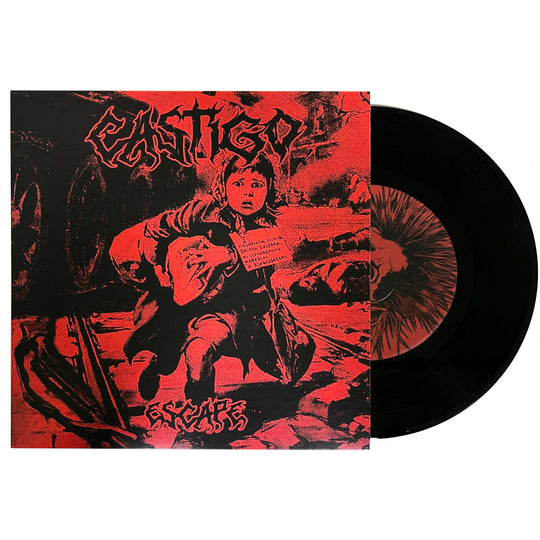
Castigo: Escape 7” (Archaic Records) Archaic Records brings us this very limited (150 copies!) 7” from Mexican punks Castigo. Castigo reminds me a lot of Nightfeeder, with fast-but-not-crazy-fast tempos, riffing that’s inventive without being flashy, and playing that’s heavy on groove while keeping all the energy, rawness, and aggression you want from d-beat hardcore. You get the impression from moments like the tight punches in the intro to “Narcoestado” that the band could do something more technical, but they devote their energy to playing their hooky riffs with maximum power and style. I really like the vocals too, which are gruff and soaked in phlegm, but still perfectly comprehensible, which I think is important when you take on political topics like Castigo does. With four originals and a Disrupt cover, there’s no time for fucking around, and Castigo keeps things short and to the point. This might be hard to find given the small press run, but it’s worth the hunt if this is your style.


Dominación: Punks Ganan 7” (Discos Enfermos) Discos Enfermos brings us the debut by this band from Barcelona. They mention there are familiar faces in the band, and while I’m not sure what projects Dominación shares members with, it’s clear from the sound of this record that they know their way around a hardcore punk tune. Punks Ganan stays within the parameters of Japanese-style crasher crust—you could reference an older band like Gloom just as easily as a contemporary one like Physique—but Dominación finds plenty of room to make the sound their own. “Hora Final” is a straightforward rager with almost no bells or whistles, while the opening track “Inocentes” is a maze of dramatic stops, starts, and breaks that keep the listener on their toes. Dominación maintains that push and pull between straightforward rippage and more complexity across these seven tracks, with the last song, “Asesinados En Las Carceles Españolas,” climaxing with a show-stopping, inhumanly long scream. So sick.


Record of the Week: Cicada: Wicked Dream 7"

Cicada: Wicked Dream 7” (Unlawful Assembly Records) Jeff Young has already proclaimed Cicada the best hardcore band in America, and who am I to argue? For me, Cicada stands head and shoulders above so many contemporary bands because they’re so in tune with the ugliest, weirdest, most underground aspects of classic hardcore punk while still determinedly progressive, dead-set on pushing the limits of their own sound and the genre as a whole. Wicked Dream is crammed with ideas, and while five of its nine songs don’t even reach the one-minute mark, each one feels like it contains a symphony worth of music. Cicada doesn’t give ideas room to breathe and they don’t milk riffs; they get in, make their point (or ten of their points) and get the fuck out, usually within the space of seconds rather than minutes. While you hear nods to the pillars of outsider hardcore—G.I.S.M., Die Kreuzen, Cheetah Chrome Motherfuckers—Cicada is on their own trip. The main riff in the first track, “Epiphany,” strikes an uncanny balance between the tightest, most agile hardcore and woozy psychedelia, while the 51-second “Suicide Fuel” launches from another dense, agitated riff, hurling itself through some insanely brief metallic lead guitar runs and into a thrilling bass-and-drums break. The musique concrete / noise piece at the end of side A and the more metal-influenced “Much Worse” might remind you of their fellow Richmonders Public Acid for brief a moment, but it’s quickly followed up by the title track, whose ethereal lead guitar and quirky but mosh-able mid-paced riff make it one of Wicked Dream’s most memorable tracks. And there’s plenty more excitement before the free jazz pig-pile at the end of the ninth track, “Desperation Ceremony.” Despite Wicked Dream’s density, it doesn’t feel like some kind of academic math-core exercise. I love following all these little threads in their music, but Cicada weaves them into a cohesive tapestry that’s just as enthralling from a wider perspective. You can disengage with this record on a micro-level, just letting the vibes wash over you, and you’ll enjoy it just as much. Wicked Dream is just a phenomenal record, and if you want your hardcore punk to deliver all the genre’s trademark speed and intensity while still serving up something new, you’ll agree this is the cream of contemporary hardcore’s crop.

Danny's Staff Pick: February 3, 2025

What’s up fellow sorry staters? Another week, another pick! As some of you have picked up on, I have been busy listing some really great used 7"s, so check back this week as I will be listing daily! So often the week just goes by so quick and I realize that I have not really checked out anything new this week. So I have been keeping myself busy listening to things I know. Some killer 90s death metal has been played a lot this week in the warehouse and has put me in the mood to revisit one of my favorite classic 90s death metal bands: Cannibal Corpse.

I am more of a fan of Corpsegrinder’s vocals than Chris Barnes (sorry to all the die hard early Cannibal Corpse fans!) and one of my favorite Cannibal Corpse albums is Gallery Of Suicide. Right off the rip you get one of the best Cannibal Corpse songs, “I Will Kill You.” It’s a non-stop slaughter from start to finish, both lyrically and sonically of course, the only way that Cannibal Corpse knows how to do it! The cover art, like all other Cannibal Corpse releases, is gruesome and besides Tomb Of The Mutilated, one of the grossest and best covers the band has put out.

We still have some really nice and clean used Cannibal Corpse CDs and some rare NESI vinyl pressings in the store as well!


John Scott's Staff Pick: February 3, 2025

What’s up Sorry State readers? I hope everyone has had a nice week. In classic North Carolina fashion, we have gone from snow to springtime in the matter of a week, although I’m sure the winter weather will return with a vengeance. I’ve been off my movie game the past month or two, but have gotten back on track and have been hitting the theaters heavily recently. One movie I saw the other week was actually a sequel to a movie I wrote about back in October, Basket Case 2, and I can safely say it was one of the most out of left field movies I’ve ever seen. Truly a fever dream of a film. If someone out there listened to my recommendation and watched this, I implore you to watch this sequel. I’m not here to talk about blob coitus though. This past Thursday I went and watched Profondo Rosso (directed by Dario Argento) at the Rialto here in Raleigh for the conclusion of their “Gialo January” series. The movie features an amazing, off the walls score by Goblin. This actually marks the first time the Italian band worked with Argento, and they would go on to work on many more films together, including Suspiria two years later. I can’t lie, and maybe I’m showing my ass here, but I wasn’t completely in love with the film. Not to say it isn’t shot beautifully and isn’t entertaining, including some funny dialogue, but I guess it wasn’t my cup of tea. It also doesn’t help that the theater is next-door neighbors with a hookah lounge blaring music the whole time, but that’s besides the point, not even the bombastic bass could overshadow this creepy and captivating score. The title track is like the Halloween Theme’s cool older cousin that smokes weed. I’m not sure if that’ll make sense to anyone else, but it does to me. This score is not afraid to go out there, but if you’re familiar with Goblin, then you already know this. Come for the Italian murder mystery, stay for the bangin’ Goblin score.

Usman's Staff Pick: February 3, 2025

Hello and thanks for reading. I’m wondering if any readers have ever moved across the ocean with a few thousand records, and how they did it? I’m pretty sure everything is going to for real go down the shitter here in the next four years with the latest dickhead in charge. On top of all his twisted views and tyrannical political agenda, it’s hilariously scary how many times this guy has filed for bankruptcy. Every business he touches fails. Our economy is already bad enough, haha… It’s also insane that he is a convicted felon, cos like 99% of felons are prohibited from voting in presidential elections. I could go on forever, and I’m sure you could too. I really hope he doesn’t privatize the postal service, like he has repeatedly mentioned. It would fuck things up on a lot of levels, including anything that deals with mail ordering records.

Do you remember when media mail did not come with tracking? It was super cheap to ship back then, too. You could pay a little extra for tracking, but that wasn’t the standard (for me at least). It was literally like $2 at USPS to ship an LP. You could ship a stack of 15 or so LPs, and it would still be only like $5. These days, to ship a single LP it’s going to cost $5.38 alone in shipping charges. If you can make it less than 1 lb, you can ship it for $4.63, but LPs more than likely go over that 1lb threshold after they are packed. On the plus side, tracking has been a standard that came with media mail with no extra cost for like over a decade now it feels like.

I feel like tracking numbers are a blessing and a curse, or however that saying goes. It’s obviously nice to have tracking on a parcel for a number of reasons, especially if you are running a distro and need to keep track of everything coming in. But I feel like some people who are just mail ordering a few records trip way too hard about tracking numbers and updates. Do you ever buy a record from overseas without tracking? I definitely do, haha. Yeah, a bit of anxiety could come along with the gamble, but it’s nice just to kinda let the days pass and just have faith everything will go as it should. I know some people have porch thieves and cities like NYC are a zoo, but luckily, I have always had a relationship with my mail carrier, so I was never too concerned about a parcel being stolen cos it was left out or something like that. But yeah, tracking numbers have given me so much anxiety. From both sides, selling and buying.

When I do my own mailorder, my process is a lot more tedious than Sorry State. Packing records is easy enough, but of course there is more to it than that, and I don’t have the website integrations that drastically save time. When I do mailorder, I typically print out all my shipping labels first, then write on the back what the order includes. I could print packing sheets if I wanted to save time, but I don’t think it’s needed since BPDT is pretty basic and I’d rather not add more paper to the process. Man, I remember when I still hand wrote all my packages. I would probably still be doing that if not for Sorry State and learning about a thermal printer, haha, talk about saving time. Anyways, so my process means that everyone in my current mailorder queue got a tracking number, but if there is a ton of orders, some people’s order won’t get packed until the following week. If you’re someone like me, you understand that “shipping label created” doesn’t mean shit. This could mean USPS already has your parcel and it’s actually en route, but USPS neglected origin scans. Or this could mean your label is just printed, and it’s sitting in a huge stack of other orders waiting to be packed on some dude’s desk that scattered with empty beer cans or some shit. I know some people pay attention to these shipping updates, but some don’t.

I feel like Amazon, and online shopping in general, has really changed the threshold of people’s patience when it comes to waiting for their product. Most people expect same day shipping. Luckily at Sorry State, we are generally selling to like-minded punks who understand the layers of a small operation. But there are always exceptions of course. I feel like we generally stay on top of mailorder, though. Every now and again we get slammed when pre-order comes in, but I feel like we got it down pretty smooth.

Anyway, so that’s my perspective from the seller’s side. Do I even need to talk about the anxiety that can come from buyer’s side? We all know that “estimated delivery date” doesn’t mean shit, haha. It sucks when you watch your beloved parcel bounce around places it has no business being. A record we shipped the other day to New York scanned into Puerto Rico? What the fuck? I am sure it will show up though, just hopefully in one piece, haha. One of the worst things is when the parcel goes out for delivery, but then it never shows up, and the tracking updates to like “awaiting delivery scan,” and then you wait for days for it to show up. Or better yet, when the thing scans delivered, but it actually hasn’t showed up, haha! That’s maybe one of the worst. I think what has happened there is your carrier said, “fuck it, I will just scan these delivered” (for a number of different reasons that I will not take the time to explain here) and then deliver them later in the week. I’ve seen that so much, it’s wild. Sometimes they show up the next day, or sometimes it’s nearly two weeks later. Alright, I just wrote way too much about shipping, sorry. At least I am talking to the right crowd, haha. In summary, all I mean to say is that I am grateful for those who are patient with stuff. I wish everyone was like that. Sometimes stuff takes time, and then when it’s outta of our hands, USPS does something crazy with it. But it works out just fine 99% of the time. Update scans don’t really indicate shit at the end of the day. I need to remind myself sometimes to stop checking the status of an incoming parcel. If something seems to be going wrong, I have all the time in the world to worry later if it actually ends in misfortune.

I will finish off here with some brief words about ZYKLOME A. I don’t know shit about Belgian punk/hardcore honestly. ZYKLOME A was my introduction, and I learned about a few more bands from some compilations that were also released on Punk Etc: namely Alle 24 Goed! and Second Time Around. Some favorites from those comps are SUBVERSION and CAPITAL SCUM. SUBVERSION is such straight DISCHARGE worship, it’s sick. Game of the Arseholes reissued some of their material on a 7”. If you’ve never heard it, check it out. So, this ZYKLOME A reissue is super-duper nice. It includes their tracks from the aforementioned comps, their tracks from the MORAL DEMOLITION split, the Made in Belgium LP tracks, and some live shit. Oh man, there is an unreleased song from their Alle 24 Goed! recording session as well, actually. I was kinda disappointed at first when I saw they separated that track and started off side D with it, followed by the live shit. But after I heard the live stuff, I was stoked. The sound quality of the live material is excellent. It sounds like it’s gotta be direct from the board, and mixed well. It was recorded in 1984.

Alright, let me back up a bit. So, this discography was released by a label based in Antwerp, Belgium called Ultra Eczema. From my understanding, this reissue was done as a tribute to Markus, ZYKLOME A’s singer, who passed away some years ago. The reissue is super deluxe and obviously done with love. I explained what material they compiled already, but I didn’t really explain it comes on two separate discs. They each come in a printed inner sleeve, housed in a gatefold jacket. The really sick thing about this reissue is this killer 75+ page booklet that comes with it. It’s printed in color and it’s loaded up with tons of photos, flyers, scans of old adverts and zines, and most importantly, the label conducted an interview with some of the band. This reissue actually came out a few years ago, and I think it just had pretty poor distribution in the US. It was distributed well overseas, and the label is now left with some dead stock. We were lucky enough to get these at a very low cost, so they are retailing for only $30. I really can’t get across how insane of a price that is for how nice this thing is. I am glad we were able to get these copies and pass on the deal to everyone else. If you’ve loved them for ages or if this is your introduction to ZYKLOME A, this is a great way to get all their material in one place with killer extras—all for a great price. I consider this one essential. Alright, that’s all for today. I blabbed for too long about shipping earlier. Cheers and thanks for everyone for your support.

Dominic's Staff Pick: February 3, 2025

Greetings to you all. Thanks for taking the time to read the Sorry State Newsletter. It’s greatly appreciated and hopefully you get some useful information out of it and a brief distraction from “other stuff” that is going on. Music and the arts in general are especially important right now and have real power to unify, to soothe, to entertain, to inspire and to communicate truth. For our small part, it is an honour to pass on information and to highlight cool shit that you might like.

Writing for the newsletter is fun and a privilege, but in the company of my colleagues can be a little tough sometimes. We boast some bona fide credentials and talent amongst the team, and attempting to pen anything as interesting as theirs is always a challenge. Speaking for myself only, but I really struggle to pull the words out of my head sometimes, and can stare at a blank screen for a while. Partly because my head is full of too many other “life” things, which makes it difficult for me to concentrate, and partly because I love music and the artists that created it so much that I don’t want to do a poor job talking about something (especially if others have done it way better) or simply “phone in” a review of a record or whatever. Believe it or not, it matters to me. As it does all of us here. You don’t work at a record store and small label thinking you’re going to be super rich. If anything, it’s the complete opposite. As Daniel says, a vow of poverty. I have committed to that philosophy over the years and have chosen records over almost everything else in my life. Clearly that has been to my detriment, but at least my soul got to take in some killer shit, and hopefully I enriched other peoples’ souls by sharing and passing on knowledge of good stuff. Whether that’s been as a DJ or as a shopkeeper, the goal has always been to evangelize and pass on and to keep alive quality human artistic expression. I’m happy to play a minuscule part in that and always will.

One of the best and most exciting parts of buying and selling records is when you score a great collection. Sorry State (touch wood) has historically had good luck with that, but we’re always looking for the next cool pick up. The holiday period cleared out the bins significantly at the store and we needed replacements. I love seeing our compatriots at other record stores picking up cool collections, but admit to getting envious sometimes. So, it was a blessing from the vinyl gods that delivered a large collection to us just recently. From the collection of a music industry insider who worked from the mid 1970s through to the late 1990s and acquired, multiple in many cases, promo copies of records he was involved with. We have tons of (mostly) un-played promo copies of cool Jazz, Rock, Pop, Country, Classical, Soundtracks and more besides, which we will work on pricing and getting into the store and listing directly to our online channels as well. The store saw the first fruits of that collection hit the bins last Friday and will see more to come over the next few weeks, but many titles will go straight up online, so make sure to scan our listings. A lot of these will be sealed or unplayed copies too.

Over the weekend, I filled up a few boxes of more potential sellers for the store, but because we got busy with other things they remained in the trunk of my car, and I ended up bringing them home. The temperature has been in the 60s this weekend, so there are no worries of them being too hot or cold. However, I brought them inside just in case. That gave me a chance to pull out one or two that I didn’t know and that looked interesting to check out. The perfect way to spend my Sunday between watching the football. I only had time to listen a few of the many cool records and have gone with something new to me for my “pick” this week. I could have easily picked one of several more obviously cool and known titles. There are loads of those in this collection, and many that come with a price tag reflecting their desirability. But instead I’ve gone with a cheaper one. I have a soft spot for records that aren’t too expensive but still pack a punch and provide for some good listening. Also, like Daniel, I don’t mind having lower grade copies of records that would otherwise be a lot more expensive. If the vinyl is mostly clean and decent and plays without major noise and/or skips, I’m okay. Certainly, jackets don’t have to be spotless for me. Obviously, I prefer a nice copy without damage, but I can live with a seam split or some writing on the back, etc. Just no mold from moisture exposure. I can’t do that. The copy I am about to talk about is decent, has a punch hole and plays well. I only pulled jazz records from the collection, so if that’s not your bag, you can be excused. LoL.

Up is pianist Rupert Cobbett and a record he released in 1976 called Sensitive Cat on the independent Soul Deep label out of Fort Lauderdale, Florida.

I was drawn to the title first. I consider myself a sensitive cat and have a poorly sensitive cat at home currently. Then there was a cartoon sketch on the back of the jacket depicting a cat playing keyboards with the black keys spelling out progressive. Cool. That and the nature of the Soul Deep private label intrigue coupled with the photo of Mr. Cobbett on the cover and the dedication to the “Jazz Freaks” of the industry on the back all shouted out to me to drop the needle and see what sounds came out of the speakers. I’m happy to report a winner. Not an out and out classic or an essential banger, but a decent record that would appeal to anyone who likes 70s Jazz Funk and electric keyboard led music. I was a little skeptical as the first track began as it sounded mainstream, and I was fearful this might be a lame cocktail lounge record. This song called Just One Reason was hyped on the front cover as being a hit single. I don’t know about that. Maybe on the Holiday Inn bar scene it was. LoL. Although at halfway through that song, I heard some cool percussion and signs that there might be better to come. The second track, On Three Legs, quickly proves that to be the case. Producers might want to get their samplers out for elements of this track. There were some tasty beats in parts, and the piano playing was top-notch. Rupert has the chops to be spoken about alongside big names like Ramsey Lewis and Herbie Hancock when it comes to this particular period of piano based jazz.

The rest of the musicians on the date are allowed to demonstrate their talents as the album continues. The third song, Ultra Wave, gives both the drummer some and the bassist space to groove and show what they can do. Side one ends with my favorite cut so far. Called Seven Heaven, it has an Afro-Funk sort of groove going on and would appeal to fans of groups like Cymande and War, or perhaps even Mandrill. Not as heavy or overtly funky, but the song has a nice groove to it and features some tasty flute work.

Side two opens with Bad Rooster and more tasty drums that surely have been sampled (or need to be) and progresses in a Stanley Turrentine and Freddie Hubbard on CTI records sort of fashion. The drummer keeps the groove going throughout and would make Steve Gadd proud. As the song gets into a bit of a breakdown, this sweet synth sound comes in. Really cool.

The next song, Play The Game, gets into a Latin Funk light type of groove. There’s some more tasty flute and bass parts and consistent percussion and drums.

They lose me a little on the third track called Ballad Acoustics, as they take their foot off the gas a little, but it’s still a nice track in the vein of something Vince Guaraldi might play on one of the Charlie Brown TV Specials soundtracks that I love so much. Beautiful piano playing and deft bass lines.

The album closer is called What It Is, and is the only song with vocals. The song has a Caribbean sounding vibe to it and doesn’t quite fit in with everything that proceeded it. It isn’t that bad of a song, but it isn’t that great either, and seems to be an odd addition. I wonder what the thought process was behind including that, and whether it was recorded at a different time to the rest of the album.

So yeah, there you have it. Worth checking out and keeping an eye out for if you like the type of Soul Jazz that labels such as Muse or Black Jazz were releasing at the same time. You can click here for a link to listen to the song Seven Heaven and get a taste.

Rupert Cobbett released a second record on the same Soul Deep label, his own I believe, the following year in 1977 called Peaceful Morning that’s in the same vein as Sensitive Cat. Looking at Discogs, it seems like people are paying good money for a copy of that one, and the same might be said about the first one now too, although the median on that one is still at $20. I think tracks from the second album have been sampled and compiled on to mix tapes, which has raised their profile and hence has more people on the hunt which, in turn, raises the price.

I’ve checked that album online and liked it too. Maybe I’ll find a copy in this current collection we are still going through. There might be one. If he had the first, why not the second? It would make sense. Keeping my fingers crossed. In the meantime, I’ll enjoy listening to Sensitive Cat with my sensitive self and my actual sensitive kitty cat.

Cheers everyone. Thanks for reading and supporting us and supporting everyone else that is trying to put the good word out and do good things. We’re in this together. It’s going to be rough, but if we find community in music and other interests, then we might just make it. Keep the faith.

-Dom